

Photo: SwingTradingLog
What Is Swing Trading? Strategy, Stocks & Day Trading Compared
What swing trading means, how it differs from day trading and intraday trading, stocks for swing trading, forex and options workflows, and why a trading journal matters.
Search trends show millions of people asking what is trading, how day trading differs from swing trading, and which stocks fit a multi-day hold. If you are comparing styles before opening a trading account, this guide explains swing trading in plain language: what it is, a simple swing trading strategy framework, and how it relates to intraday trading, option trading, and forex trading.
What is trading?
Trading means buying and selling financial instruments to profit from price movement, usually over hours to weeks, not decades. Online trading platforms and charting tools make execution fast; the hard part is repeating a process with defined risk. Whether you trade stocks, options, forex, or crypto, you need a plan for entry, exit, and position size, plus a record of what actually happened.
What is swing trading?
Swing trading sits between day trading and long-term investing. You hold positions for days to weeks to capture a swing in price, often from a pullback into support or a breakout above resistance. A swing trade typically has a stop under structure and a target at the next level, with risk sized as a fraction of your trading account.
- Hold time: usually 2 to 15 sessions, sometimes longer around earnings or trends
- Charts: daily and weekly timeframes; trading charts with moving averages or levels you trust
- Risk: overnight and weekend gap exposure is real; size accordingly
- Review: weekly P&L and setup tags beat scrolling social feeds after a red day
Swing trading vs day trading vs intraday trading
| Style | Typical hold | Session focus | Journal cadence |
|---|---|---|---|
| Intraday / day trading | Minutes to hours; flat by close | Opening range, scalps, momentum | End-of-day trade log |
| Swing trading | Days to weeks | Daily chart setups, catalysts | Weekly review + active position notes |
| Position / investing | Months to years | Fundamentals, allocation | Quarterly or annual |
Intraday trading and day trading demand fast decisions and strict daily loss limits. Swing trading allows fewer trades but requires patience through pullbacks and honest logging when you widen a stop. Neither style works without tracking results; a trading app that combines journal, dashboard, and P&L analytics saves time versus spreadsheets.
Swing trading strategy basics
A swing trading strategy is a repeatable set of rules: which market you trade, what setup you take, how you size, and when you exit. Most strategies fall into breakouts, pullbacks in trends, mean reversion, or event-driven plays. The edge is not the indicator alone; it is executing the same rules when bored, scared, or greedy.
Minimum swing trading strategy checklist
- Universe: e.g. US large caps, NSE liquid names, or major forex pairs
- Setup definition: written trigger, not a vague feeling
- Stop and target before entry; know R:R
- Max risk per trade and per day
- Journal every trade with tags for setup and mistakes
Stocks for swing trading
The best swing trading stocks for your book depend on liquidity, volatility, and whether you trade breakouts or pullbacks. Many traders build a swing trading watchlist of 15 to 30 names, rank setups nightly, and only trade the top two or three the next session. Stock trading journals help you see which sectors and tickers actually pay you over 30 or more closed trades.
Forex, options, and gold trading
Swing trading forex uses the same journal fields as equities: pair, direction, entry, stop, target, and notes. Option trading adds expiry and structure (spread vs naked). Gold trading and other commodities often swing on macro headlines; log the thesis so you can review whether you traded the chart or the narrative. SwingTradingLog supports equities, options, forex, and crypto in one online trading journal.
Paper trading and your first real journal
Paper trading lets you practice entries and exits without capital at risk. The gap appears when you go live: slippage, hesitation, and sizing drift. Treat paper trades like real ones in your journal for a few weeks, then continue the same log when you fund a trading account. Consistency beats switching tools every month.
Track swing trades with SwingTradingLog
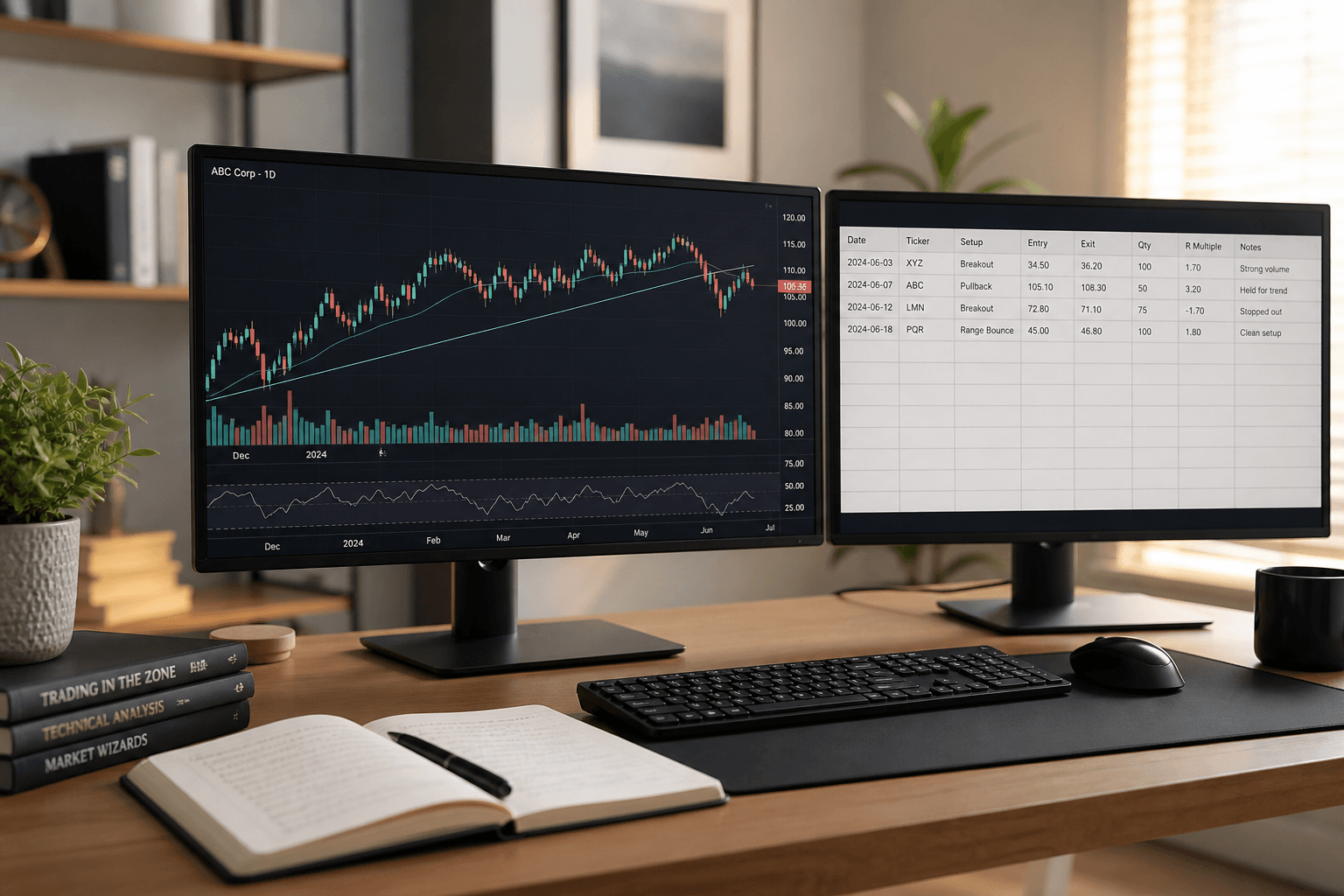
SwingTradingLog is a free trading journal and trading app for multi-day holds: log trades in under two minutes, attach trading chart screenshots, see overnight exposure on the dashboard, and review analytics without exporting CSVs. Whether you are learning what is swing trading or refining a mature swing trading strategy, start with a journal that matches how you actually trade.
Ready to log your swings? Start free on SwingTradingLog, or explore trading guides and the risk calculator.