

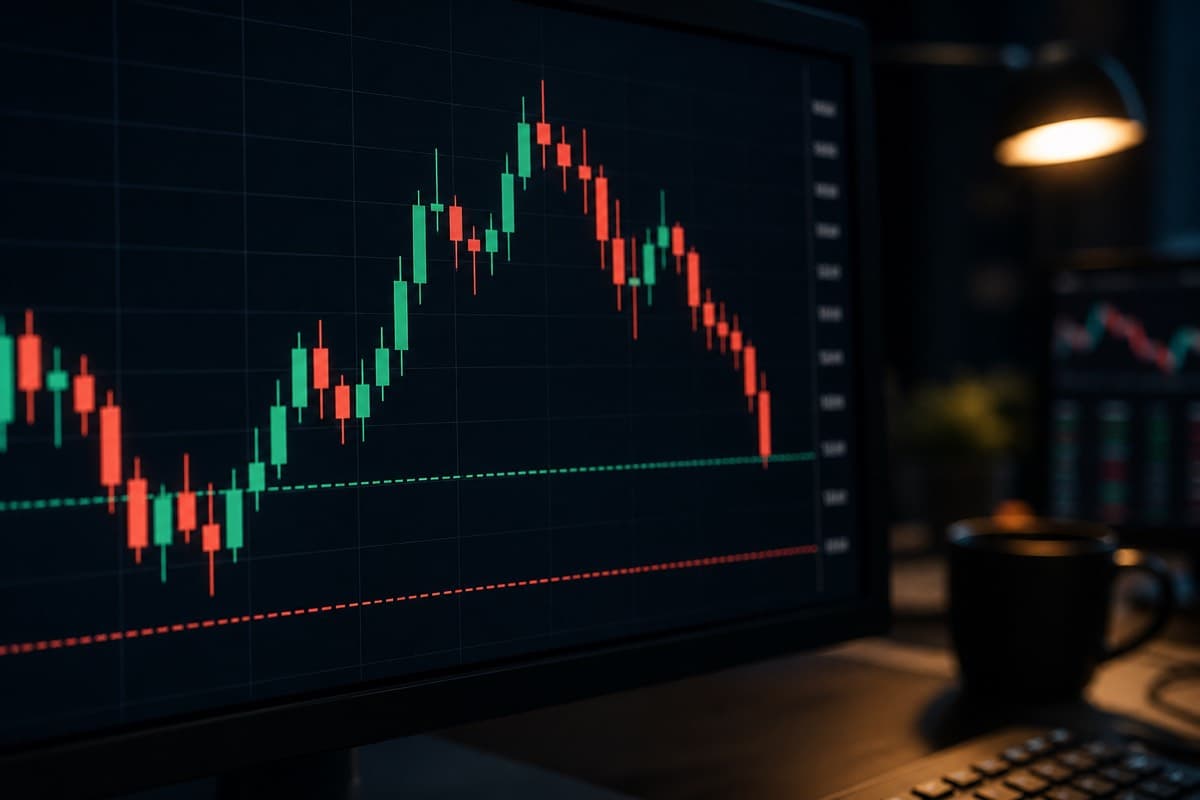
Photo: SwingTradingLog
Where to Place Stop Losses on Swing Trades (Without Getting Shaken Out)
Structure-based stop placement for multi-day holds: swing lows, ATR buffers, and when to accept a wider stop with smaller size.
A stop too tight gets hit on normal noise. A stop too wide turns a small mistake into a large loss. Swing traders need stops that respect the chart structure of the setup, and position size that matches the distance to that level.
Place stops where the thesis breaks
If you bought a pullback to support, the stop belongs below that support, not at an arbitrary 2% from entry. If you bought a breakout, the stop belongs below the breakout level or the last swing low that invalidates the pattern. The stop is a line in the sand: “If price is here, I was wrong.”
- Long swings: below recent swing low or breakout base
- Short swings: above recent swing high or failed breakdown
- Add a small buffer beyond the level (wick room), not a huge cushion
- Avoid stops inside the average daily range with no structural reason
ATR and volatility buffers
On volatile names, a few ticks below support is not enough. Many traders use 0.5× to 1× ATR beyond the level as a buffer so a normal wick does not stop them out before the move. If that makes the stop too wide for your risk budget, size down, do not move the stop closer without a structural reason.
Set the stop before entry and do not move it
Log stop and target when the trade is Active. Moving a stop farther away after entry is hope: not risk management. Trailing stops are fine when price moves in your favor; widening against you is how small losses become account damage.
Review stop quality in your journal
In weekly review, sort losers and ask: Was I stopped on noise or was the thesis wrong? If noise stops repeat on the same setup, widen the buffer or trade a cleaner timeframe. SwingTradingLog keeps stop and target on every active trade so you can audit placement without scrolling old charts.
Ready to log your swings? Start free on SwingTradingLog, or explore trading guides and the risk calculator.